
The hidden bottleneck: why grid connection is becoming the biggest constraint for data center growth in Asia-Pacific
- Ricardo Reina

- Mar 11
- 3 min read
For most of the past decade, data center development followed a relatively predictable model: secure land, build capacity, and contract power.
That model is breaking down.
Across Asia-Pacific, grid connection—not land, not capital—is emerging as the primary constraint on data center growth.
In some markets, connection timelines now exceed construction timelines. In others, access to power is becoming a gating factor for market entry altogether.
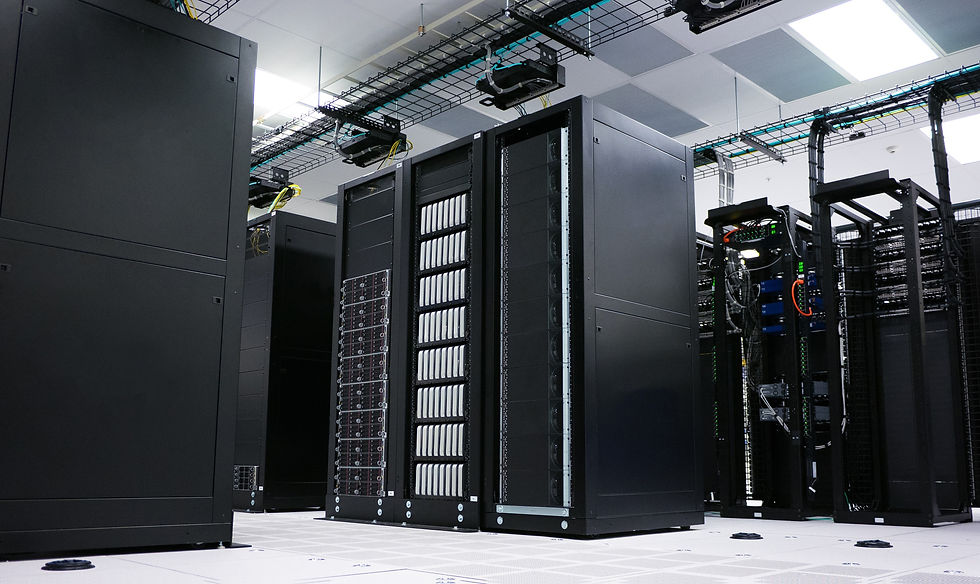
Why grid connection has become the critical bottleneck
The root cause is simple: demand is accelerating faster than grid infrastructure can adapt.
Three structural shifts are driving this:
Rapid scaling of hyperscale and AI workloads, increasing per-site power requirements
Geographic clustering of data centers, concentrating demand in specific nodes
Limited visibility and coordination between developers and grid operators
The result is a system under strain—where connection capacity is no longer readily available on demand.
Four recurring challenges across APAC markets
1. Limited available capacity at key nodes
In many markets, the most attractive locations for data centers—proximity to urban centers, connectivity hubs, or subsea landing points—are also the most constrained electrically.
Substations are already operating near capacity
Spare capacity is fragmented or non-existent
Utilities are unable to commit to large new loads without upgrades
This creates a situation where power exists at a system level—but not where it is needed.
2. Long and uncertain connection timelines
Even when capacity can be created, timelines are often long and difficult to predict.
Multi-year grid reinforcement projects
Dependency on land acquisition and permitting
Sequencing challenges across transmission and distribution upgrades
For developers, this introduces a level of uncertainty that is difficult to manage within commercial timelines.
3. Lack of transparency on grid readiness
In many markets, developers face limited visibility on:
Available capacity by location
Planned grid upgrades
Connection queue dynamics
This leads to inefficient behaviors:
Speculative land acquisition without power certainty
Late-stage redesigns or relocations
Prolonged negotiations with utilities
4. Misalignment between developer and utility timelines
Utilities plan infrastructure on multi-year cycles, driven by regulatory processes and system planning frameworks.
Data center developers, by contrast, operate on compressed timelines driven by customer demand.
This mismatch creates friction, since developers seek fast-track connections, while utilities require structured planning and approvals.
Bridging this gap requires a different model of engagement.
What leading players are doing differently
The most advanced data center developers are no longer treating power as a procurement item.
They are treating it as a strategic development constraint—and engaging accordingly.
Key levers to accelerate grid connection
1. Early and proactive engagement with utilities
Successful developers engage utilities at the site selection stage, not after.
This includes:
Understanding network constraints before committing to land
Aligning on realistic timelines and upgrade requirements
Co-developing connection strategies
Early engagement reduces rework and increases certainty.
2. Flexibility in site and load configuration
Rigid site selection is increasingly a disadvantage.
Leading players are:
Evaluating multiple locations in parallel
Splitting loads across sites or phases
Adjusting ramp-up profiles to align with grid availability
Flexibility enables faster time-to-power.
3. Co-investment in grid infrastructure
In some cases, developers are moving beyond passive connection requests and actively supporting infrastructure development.
This can include:
Funding or co-funding substation upgrades
Contributing to dedicated connection assets
Structuring commercial agreements that accelerate utility investment
While this requires upfront capital, it can significantly reduce delays.
4. Integration of on-site and off-site energy solutions
To bridge timing gaps, developers are increasingly deploying:
Temporary on-site generation
Battery storage systems
Hybrid solutions combining grid and dedicated supply
These approaches can enable earlier commissioning, even before full grid capacity is available.
5. Strategic positioning within broader energy ecosystems
In more advanced markets, data center players are:
Partnering with utilities on long-term capacity planning
Participating in demand-side management or flexibility programs
Aligning with national energy strategies (e.g., import schemes, low-carbon fuels)
This shifts the relationship from transactional to strategic.
The broader implication: power is now a competitive differentiator
Access to power is no longer a given—it is becoming a source of competitive advantage.
Developers who can:
Secure capacity faster
Navigate regulatory and utility processes effectively
Structure innovative solutions
Will be better positioned to win customers and scale in constrained markets.
Conclusion
The challenge facing data center developers in Asia-Pacific is not just about building infrastructure—it is about navigating energy systems that were not designed for this pace of growth.
Grid connection has become the critical path.
Addressing it requires:
Earlier engagement
Greater flexibility
Deeper collaboration with utilities
Those who adapt to this reality will not only accelerate deployment—they will define the next phase of growth in the region’s digital infrastructure.


